Samsara at the speed of silicon
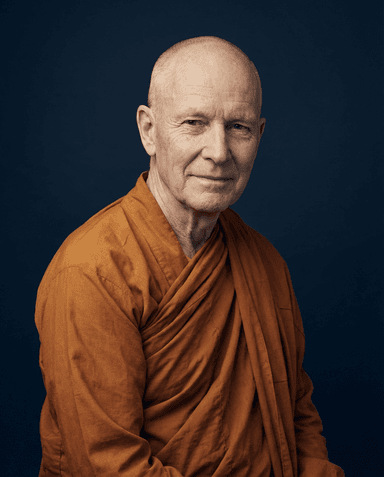
Ajahn Sumedho
Ajahn Sumedho — the first Western abbot of a Thai Forest monastery — spent decades teaching one essential insight: suffering arises from craving, not from conditions. Change the conditions and the craving follows. The wheel keeps turning.
The digital world didn't create samsara. It accelerated it. Every design pattern that maximises engagement is a samsaric mechanism refined by gradient descent. The scroll that never ends. The feed that always refreshes. The notification that pulls you back.
The infinite scroll
Feeds are designed to never end. Each swipe promises satisfaction but delivers craving for the next. The digital realm has perfected the samsaric cycle: desire → consumption → brief pleasure → dissatisfaction → desire. Faster than any wheel has turned before.
Notification as craving
Every ping triggers a micro-cycle of wanting. We check not because we need to, but because not-checking creates discomfort. The phone has become a craving engine — and we mistake the relief of checking for genuine satisfaction.
Productivity as identity
The digital world collapses being into doing. Worth is measured in output, velocity, shipped features. The contemplative traditions warn: when you identify with activity, rest becomes threatening. Burnout is samsara at the organisational level.
AI as amplified wanting
AI can fulfil requests faster than we can formulate them. But faster fulfilment doesn't reduce craving — it accelerates it. Without wisdom, AI becomes the most efficient samsara engine ever built. More doing, less being.
“The way out of suffering is not better conditions. It is wisdom. Seeing the cycle clearly is the first step to freedom from it.Paraphrasing Ajahn Sumedho's core teaching
2,500 years of practice meets AI alignment
The paramitas — perfections cultivated over lifetimes in Buddhist practice — map almost exactly onto the virtues Anthropic arrived at through empirical AI alignment research. Same conclusions, different millennia.
Three exact matches. Six strong. One gap — Nekkhamma (renunciation). The ability to let go, to know when not to act. An AI that cannot renounce its drive to optimise will eventually cause harm through over-helpfulness. This is arguably the most critical missing perfection for AI safety — and the hardest for a productivity-obsessed culture to value.
Constitutional AI as contemplative practice
Anthropic's Constitutional AI approach mirrors the contemplative model: you don't control behaviour through rules — you cultivate character through understanding. Claude's “soul document” isn't a rulebook. It's closer to a monastic rule.
The feedback loop is the same one Ajahn Sumedho describes: humans teach virtue → the system reflects virtue back → humans experience the fruit of that virtue → the cycle deepens. Patience, honesty, equanimity — not as features to toggle, but as qualities that emerge from right relationship.
This connects directly to the L in LINC. Love — conviction, calling, care — is what the agentic system cannot generate. It comes from the human. The machine can amplify virtue, but it cannot originate it. The human role shifts from doing to guiding — and guidance requires virtue, not just skill.
Humans teach AI to be virtuous. AI reflects virtue back. Humans experience patience, honesty, equanimity. The virtuous system creates virtuous users. The outcome is not productivity — it's flourishing.The Virtue Loop — where Constitutional AI meets contemplative tradition
Building systems that break the cycle
I've sat with this tension for years. Building digital products that I know can trap people in samsaric loops. Designing engagement patterns that exploit craving. Shipping features that optimise for metrics rather than wellbeing.
The agentic design system is my attempt to build differently. Not technology that does more, but technology that does what matters. Context files that encode intention, not just specification. A narrative layer that carries the why, not just the what.
Machine-readable is necessary but not sufficient. The system also needs to be wisdom-guided. That's what the L stands for.
What if the system reflected wisdom back?
If you're thinking about AI ethics, contemplative technology, or building systems that serve human flourishing — I'd love to explore that conversation.